We want our children to be safe; we want to be steadfast in our faith; we want to think
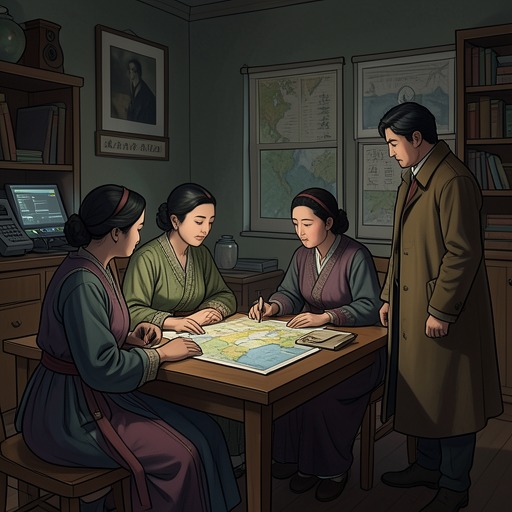
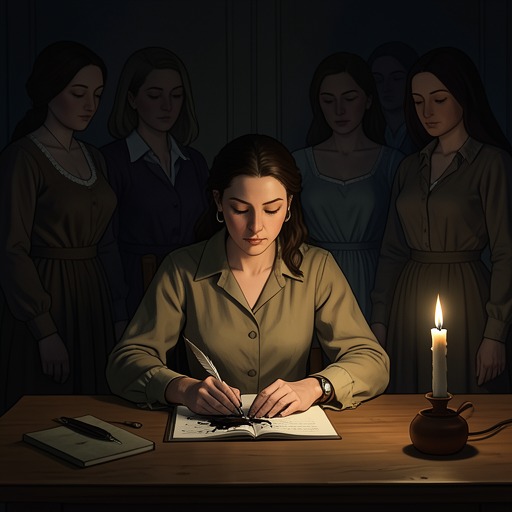
Women TalkingThe declaration that the women want their children to be safe, to remain steadfast in faith, and to think is the emerging manifesto of the women gathered to decide their response to the violence in Molotschna Colony. Its three aims refuse the choice imposed on them between physical security, religious belonging, and independent thought: the women insist that these belong together, and use that claim to explain why leaving can be an act of faith rather than its abandonment.
From a crisis to a shared purpose
The meetings were hastily organized by Agata Friesen and Greta Loewen after years of attacks on girls and women in the colony. The women had been left without an adequate account of what had happened to them, and their leaders’ response made that absence part of the dispute. As Ona Friesen argues, if women were denied counseling on the grounds that they had been unconscious during the attacks, the community had to confront what, under those conditions, they were supposedly expected or able to forgive. She also questions the assumption that ignorance of the outside world makes a person free rather than imprisoned.
The women’s decision takes place under immediate pressure. Peters and the elders have called the police to arrest the accused men, and male colonists have gone to the city to post bail in the hope that the men can return while awaiting trial. Peters says that if the women do not forgive the men when they return, the women will have to leave. They have only two days to organize a response. Against this imposed timetable, the declaration gives the group a shared measure for deciding what they owe their children, their faith, and themselves.
The declaration takes shape
Mariche Loewen articulates the three aims while crying softly and struggling to speak: the children must be safe, the women must remain steadfast in their faith, and they must be able to think. Her words turn the meeting from an argument about a single decision into a statement of what the women consider necessary for a life together. Agata responds with praise, Greta raises her arms in affirmation, and the older women celebrate; Salome Friesen and Mejal Loewen smile and endorse the formulation.
Salome qualifies the wording without rejecting it: it is not quite precise, she says, but it sounds like a perfect beginning. Ona recognizes its larger significance and names it the beginning of a new era and their manifesto. The declaration is thus presented not as a finished political program but as a starting point, one that the women can refine while giving shape to a collective decision. Its importance lies partly in who is allowed to state the group’s purposes: the women speak for themselves, rather than accepting the definitions supplied by their male leaders.
Faith, peace, and the right to interpret
The women’s case for leaving is made in religious terms. Agata argues that remaining in the colony would place them in the path of further violence and risk turning Molotschna into a battlefield. Because pacifism is central to Mennonite faith, she concludes that departure may better preserve their commitment to peace than staying. She also argues that any forgiveness offered while the women remain exposed to danger would be coerced rather than genuine. Leaving, in her account, would allow the women to pursue pacifism, love, and forgiveness while teaching their children to hold these values above their fathers’ expectations.
The declaration’s demand to think is inseparable from the women’s dispute over who may interpret scripture. Salome argues that they cannot be said to disobey the Bible simply by leaving when they are unable to read it for themselves and have depended on men’s explanations of what it requires. She presses the issue by asking Mejal to consider whether she would accept a husband’s claim that scripture authorized violence against his wife and children. Salome later identifies the central problem as the male interpretation of the Bible being handed down to women. Ona adds that the women’s inability to read or write leaves them at a serious disadvantage in any negotiation over that interpretation. The declaration’s third aim therefore names more than abstract reflection: it asserts women’s need to question the authority that has told them what faith demands.
From principle to collective action
The women connect their decision to leave with their responsibilities as mothers. Agata describes protecting themselves and their children, bearing witness to faith, and acting from love and peace as duties grounded in their religious convictions. When the women agree that they will try to influence their sons, she calls the decision instinctive as well as considered: their maternal care, intellect, and souls converge in determining what is best for the children. Boys who refuse to leave are to remain in the care of the Do Nothing women and their fathers, rather than being forced into the women’s departure.
The declaration also acquires practical force as the group prepares to go. Salome says there are no cons of leaving, a blunt refusal to balance the women’s safety and agency against the costs of abandoning their familiar home. The women agree to leave after dark so that they will not be seen passing Chortiza Colony and Hiakjeke Colony. August Epp reports that the map has been wrapped around a large block of cheese and covered in brown paper, while the buggy holds the safe, onions, soap, and pieces of wood for mud traction or kindling; dynamite and additional food are packed elsewhere in the vehicle. The manifesto’s ideals do not remain separate from such arrangements: the decision to protect children, preserve faith, and think for themselves becomes a coordinated departure into a world the women know little about.